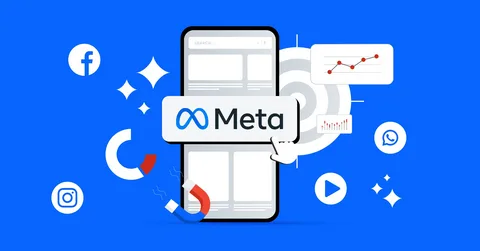
What Are Meta Ads? These are paid ads that show up on Facebook, Instagram, Messenger and the Audience Network. You can manage all of these ads in one place called Meta Ads Manager.
You can run one ad campaign. It will show up on all of the Meta-owned sites at the same time. The computer program will figure out which site is the place to show your ad to get the best result.
Why Optimization Makes or Breaks Campaigns
Two businesses can run the same product, same budget, and same general audience on Meta — and get completely different results.
The difference almost always comes down to how the campaign is built and managed.
Meta’s algorithm rewards quality. Ads that generate strong engagement signals — clicks, saves, purchases, video views — get shown to more people at lower cost.
What Real Optimization Actually Involves
Real Meta ad optimization is not checking in once a week and adjusting a budget.
It is a structured, ongoing process with distinct layers.
Technical Foundation
- Meta Pixel installed and firing correctly on all key pages.
- Conversions API connected to close the iOS tracking gap.
- UTM parameters set up so data flows cleanly into analytics.
Campaign Architecture
- Each campaign has a single objective aligned to a specific business goal.
- Ad sets are structured around audiences large enough for the algorithm to learn.
- The budget is allocated to allow at least 50 conversion events per week per ad set.
Creative Testing
- Minimum three to five ad variations running simultaneously.
- Winners identified after statistically significant data — not after 48 hours.
- Underperformers paused. Budgets shifted toward proven combinations.
Scaling Protocol
- Budget increases are capped at 20 to 30 percent at a time to avoid resetting learning.
- Winning ad sets are duplicated rather than edited to preserve algorithm learning.
- New creative is introduced consistently to prevent frequency fatigue.
Which Companies Offer the Best Meta Ad Optimization Services
Key Traits of Top Companies
The companies delivering genuine meta ads services all have a few things in common — and they are not hard to spot once you know what to look for.
- They audit before they build. No serious team launches campaigns without reviewing existing account structure, pixel health, and historical data first.
- They prioritize tracking setup before spending. Every dollar spent without proper conversion tracking feeds the algorithm bad data and produces worse results over time.
- They report on business outcomes. Cost per acquisition, return on ad spend, revenue attributed to paid — not reach, impressions, or page likes.
- They treat creativity as a performance variable. Not a design exercise. Not a branding task. Something to be tested, measured, and improved systematically.
- They communicate proactively. Weekly performance updates. Clear explanations of what changed and why. No waiting for you to chase them for data.
- They give you full account access. Always. Any agency that controls your ad account and restricts your access to it is operating in their interest, not yours.
Questions to Ask Before Hiring
Before signing a contract with any company, these questions will tell you quickly whether they know what they are doing.
- How do you structure campaigns to align with Meta’s learning phase requirements?
- What does your creative testing process look like, and how do you define a winning ad?
- How do you handle Conversions API setup and iOS attribution loss?
- What KPIs will you report on weekly, and how are they tied to my business goals?
- Can you show me documented results from a business similar to mine?
- Will I have full access to my own ad account at all times?
A team that can answer every one of these questions clearly and specifically is worth talking to further.
A team that deflects, speaks only in generalities, or pivots immediately to portfolio screenshots should be removed from your shortlist.
Red Flags to Avoid Completely
The Meta advertising space has no shortage of companies that sell confidence without the skills to back it up.
These are the warning signs that should end the conversation.
- They guarantee specific ROAS or lead numbers before seeing your account, offer, or market.
- They cannot explain how the Meta auction works or what Total Value means in ad delivery.
- Their proposal focuses entirely on creative production and says nothing about audience strategy or campaign structure.
- They promise results in the first week without acknowledging the learning phase.
- They own your ad account and will not give you login access to it.
- They report on reach and impressions as primary success metrics rather than conversions and revenue.
- They have no documented process for creative testing — they just ‘run ads and see what happens.’
Any one of these is a reason to walk away. Several of them together is a reason to run.
What Results Should Look Like
Knowing what good performance looks like helps you evaluate any company’s claims.
For e-commerce, a well-optimized Meta campaign typically targets a 3x to 5x return on ad spend after at least 60 days of structured management.
For lead generation, cost per lead varies widely by industry — but it should be declining month over month as the campaign learns, not rising.
For brand awareness campaigns, cost per thousand impressions should sit between $5 and $15 in most markets, with frequency capped to prevent saturation.
Any company worth working with can tell you the benchmarks for your specific industry before you start — and explain the variables that will push results above or below those numbers.
Industries That Benefit Most
Meta advertising works across industries — but some verticals consistently produce stronger returns than others.
- E-commerce: Product discovery, retargeting, and dynamic catalog ads are highly effective. Strong visual creative paired with Custom Audience remarketing produces reliable ROAS.
- Local Services: Geo-targeted campaigns with lead generation objectives work well for service area businesses — home improvement, healthcare, legal, and financial services.
- Education and Coaching: Video content and webinar funnels perform well. Meta’s interest and behavior targeting reach people actively seeking knowledge in specific areas.
- Real Estate: Property listings with carousel ads and local targeting generate qualified leads when paired with strong follow-up processes.
- SaaS and B2B: Longer buying cycles require more nurturing — Meta works best at the top of the funnel for awareness and retargeting for trial sign-ups.
When to Make the Switch
Consider it if your agency cannot explain what they changed last month or why.
Consider it if your account shows no structured creative testing — just the same ads running month after month. A genuine top digital marketing agency will not need six months to show improvement. Well-structured campaigns with proper tracking typically show measurable progress within 45 to 60 days. And the best Facebook ad agency for your business is not necessarily the largest or the most expensive one. It is the one that understands your specific funnel, can explain their optimization process in plain language, and has verifiable results from comparable campaigns.
Conclusion
Meta ads can really help your business grow. Only if you do them right. The companies that get the results from Meta ads are not the ones with the most followers on Instagram or the fancy proposals. They are the ones who know how the Metas algorithm works, test their ads in a way to track the right information, and keep improving every month. So, know what to look for in a partner. Ask them the questions, like what they plan to do with your ad money. Make sure they give you access to your account and clear reports on how your adsre doing. A good partner will not hesitate to answer your questions because they have nothing to hide and they can show you results.
(FAQs)
Q1. How much does Meta ad management cost?
Most agencies charge between $1,000 and $5,000 per month for Meta ad management. This depends on the size of your Meta ad account and how complex your Meta ad account is.
Q2. How long before Meta ads show results?
You need to give Meta ad campaigns some time at four to six weeks to get out of the learning phase and become stable. You will typically start to see results from your Meta ads between 60 and 90 days after you start running your Meta ads.
Q3. What budget do I need to start Meta ads?
To run Meta ads that get conversions, you need to have a budget that’s enough to get at least 50 conversions per week. For businesses, this means spending at least $30 to $100 per day on Meta ads and this depends on how much each conversion costs for your Meta ads.
Q4. What is ad creative fatigue in Meta ads?
Ad creative fatigue happens when the same people see your Meta ad many times. When this happens, people stop engaging with your Meta ad, and the relevance score of your Meta ad goes down.
Q5. Do I need a Meta Pixel to run Meta ads?
Yes you need a Meta Pixel to run Meta ads. The Meta Pixel tracks what people do after they click on your Meta ad. Without the Meta Pixel, the algorithm that runs your Meta ads cannot optimize for purchases. Leads for your Meta ads.
Q6. What is Advantage+? Should I use it for Meta ads?
Advantage+ is a feature of Meta ads that uses intelligence to automate Meta ad campaigns. It works best for Meta ad accounts that already have a lot of conversion data for their Meta ads.
Q7. How do I know if my agency is doing a job with Meta ads?
To know if your agency is doing a good job with your Meta ads you should look at the cost per acquisition of your Meta ads over time.
Q8. Can small businesses compete on Meta ads?
Yes small businesses can compete on Meta ads. Meta ads allow small businesses to target audiences with small daily budgets, for their Meta ads.