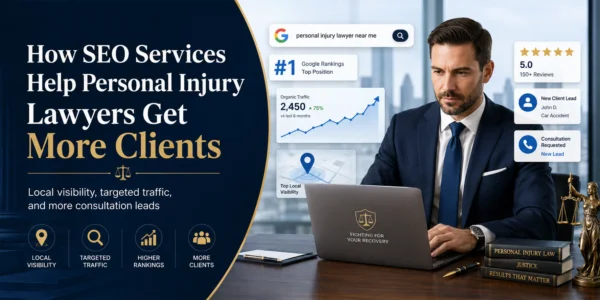
Personal injury lawyers need more than a professional website to get consistent clients online. Accident victims usually search on Google when they need quick legal guidance, local support, and someone they can trust with a serious claim.
SEO services help your law firm appear in front of these people at the right moment, not after they have already contacted a competitor. A strong SEO strategy improves your visibility in search results, Google Maps, service pages, and helpful blog content.
It also builds credibility by showing your experience, authority, and trust signals clearly. When SEO is done properly, your website becomes more than an online profile. It becomes a client acquisition system that brings qualified consultation leads.
1. SEO Improves Online Visibility

Search engine optimization improves online visibility by helping a personal injury lawyer appear when someone searches for legal help after an accident. A person with a car accident injury may not know any lawyer personally, so they usually turn to Google first.
SEO works by optimizing the lawyer’s website for the exact searches potential clients use, such as “personal injury lawyer near me” or “car accident attorney in [city].” It also improves pages, headings, local signals, internal links, and helpful content, so Google can understand which cases the lawyer handles.
As a result, the law firm reaches people at the moment they need support. This matters because higher visibility brings more qualified visitors, more consultation requests, and more chances to turn searches into real clients.
2. Local SEO Helps Them to Appear in Google Maps and Local Searches

Local SEO helps a personal injury lawyer show up when people search for legal help in their own area. Most injured clients want a nearby lawyer because they need local knowledge, fast communication, and easy access to consultations.
Local SEO works by improving the law firm’s Google Business Profile, location pages, reviews, business details, and city-based keywords. It also helps Google connect the lawyer with searches like “personal injury lawyer near me” or “accident attorney in [city].”
This is important because Google Maps results often appear before regular website results. When the firm appears there with strong reviews, clear contact details, and relevant services, potential clients can call directly, request directions, or visit the website, which increases qualified leads.
3. Keyword Research Targets Clients Who are Actively Looking for a Lawyer

Keyword research helps a personal injury lawyer understand what injured people type before they contact a law firm. Some searches show early research, such as “what to do after a car accident,” while others show strong hiring intent, such as “best personal injury lawyer near me.”
SEO uses keyword research to separate these search types and build pages around the terms that can bring real cases. This works by matching each keyword with the right page, content angle, and call to action.
For example, a “truck accident lawyer” page should speak directly to victims of truck crashes, not general injury cases. This helps the firm attract visitors who already need legal support, so more website traffic can become consultation leads.
4. Helpful Blog Content Builds Trust and Answers Client Questions

Helpful blog content builds trust by answering the real questions injured people ask before they choose a lawyer. After an accident, many clients feel unsure about medical bills, insurance calls, claim deadlines, and case value.
A strong blog explains these issues in simple language, so the reader feels guided instead of confused. SEO helps this content work by targeting specific questions, adding practical examples, and linking readers to relevant service pages.
For example, a blog about “what to do after a slip and fall accident” can guide the victim and then connect them to a slip and fall lawyer page. This helps the firm earn trust before the first call, which makes visitors more likely to request a consultation.
Read Here: What Is AEO vs SEO and Why It Matters for Modern Search Optimization
5. SEO Strengthens Credibility Through Google E-E-A-T

SEO strengthens credibility through Google E-E-A-T by showing that a personal injury lawyer is experienced, trustworthy, and qualified to handle serious legal matters.
E-E-A-T stands for experience, expertise, authoritativeness, and trustworthiness, which are important signals for legal websites because injury law affects people’s money, health, and future.
SEO supports this by adding attorney bios, case experience, client reviews, legal awards, office details, clear contact information, and well-written content reviewed by professionals. It also avoids thin claims like “we are the best” and replaces them with proof.
When visitors see real experience, helpful explanations, and transparent firm information, they feel safer contacting the lawyer. This trust can turn a cautious website visitor into a consultation lead.
6. Optimized Service Pages Convert Visitors into Consultation Leads

Optimized service pages help turn website visitors into consultation leads by giving each type of injury case its own clear path.
A person injured in a motorcycle crash does not want to read a general legal page; they want to know if the lawyer understands motorcycle accident claims, insurance disputes, injuries, and compensation options.
SEO improves these pages by using case-specific keywords, clear headings, local details, proof of experience, FAQs, and strong contact prompts. This works because the page answers the visitor’s main concern before asking them to call.
When a service page explains the problem, shows relevant experience, and makes the next step easy, more visitors feel ready to book a consultation.
7. SEO Brings Long-Term Client Leads Compared to Paid Ads

SEO brings long-term client leads because it keeps working after the first optimization effort. Paid google ads can place a personal injury lawyer at the top quickly, but the visibility usually stops when the ad budget stops.
SEO works differently because useful pages, local rankings, blog content, backlinks, and Google Business Profile improvements can continue attracting searches over time. This helps a law firm build a steady source of visitors instead of depending only on daily ad spend.
For example, a strong “car accident lawyer in [city]” page can keep bringing consultation requests for months when it ranks well. This makes SEO valuable because every improved page can become a long-term entry point for new clients.
Get Personal Injury Lawyer SEO Services from a Trusted Provider

Getting personal injury lawyer SEO services from a trusted provider means working with a team that understands how legal clients search, compare, and decide. This is not only about adding keywords to a website; it is about building a system that brings the right accident victims to the right pages.
A trusted SEO provider studies local search demand, improves Google Business Profile visibility, strengthens service pages, fixes technical issues, and creates helpful content around real client concerns.
This matters because personal injury leads are highly competitive and expensive through ads. When SEO is handled properly, your firm can appear before high-intent clients without paying for every click. As a result, the website becomes a steady source of qualified consultation requests.
Conclusion
SEO helps personal injury lawyers get more clients by connecting their firm with people who already need legal help. It improves visibility, targets high-intent keywords, strengthens local rankings, builds trust through helpful content, and turns service pages into lead-generation tools.
Unlike paid ads, SEO can continue bringing traffic and consultation requests over time. This makes it a practical long-term investment for law firms that want steady growth.
When you work with a trusted SEO provider, your website is not just optimized for rankings. It is built to attract the right visitors, answer their concerns, and guide them toward contacting your firm.