Today’s digital world needs more than a basic website. You need visibility and relevance in search results to reach the right audience. Without this, your site stays unseen. On-page SEO solves this problem. It helps search engines and users understand your content clearly. Search engines read your pages with ease. Users find value without effort. The method creates a strong base for online success.
What is On-Page SEO Optimization?
On-page SEO optimization makes the most of your website. You control these elements directly. Your site gains better clarity and structure.
Off-page factors work differently. Backlinks come from outside your website. On-page SEO stays focused on areas you manage content, URLs, and headings. These signals help search engines to understand your pages.
The main goal stays clear and simple. Search engines read your website with ease. Visitors follow a smooth and clear path through your pages. In turn, you create a helpful experience that supports strong search performance.
Why On-Page SEO Matters?
On-page SEO matters because it helps search engines to understand users searches. You give clear signals about your content. Search platforms connect your pages with the right audience. Strong on-page SEO brings several benefits.
- First, better search results matter. Optimized content and clean structure help your pages rank higher for relevant keywords.
- Next, user engagement improves. Clear headings guide readers. Descriptive URLs set expectations. Easy-to-read content keeps people on your site longer.
- Organic traffic also grows. Higher visibility in search results attracts more visitors. You gain this reach without paid ads.
- Click-through rates increase as well. Optimized titles and meta descriptions spark interest. Users feel confident before they click.
Difference Between On-Page vs Off-Page SEO
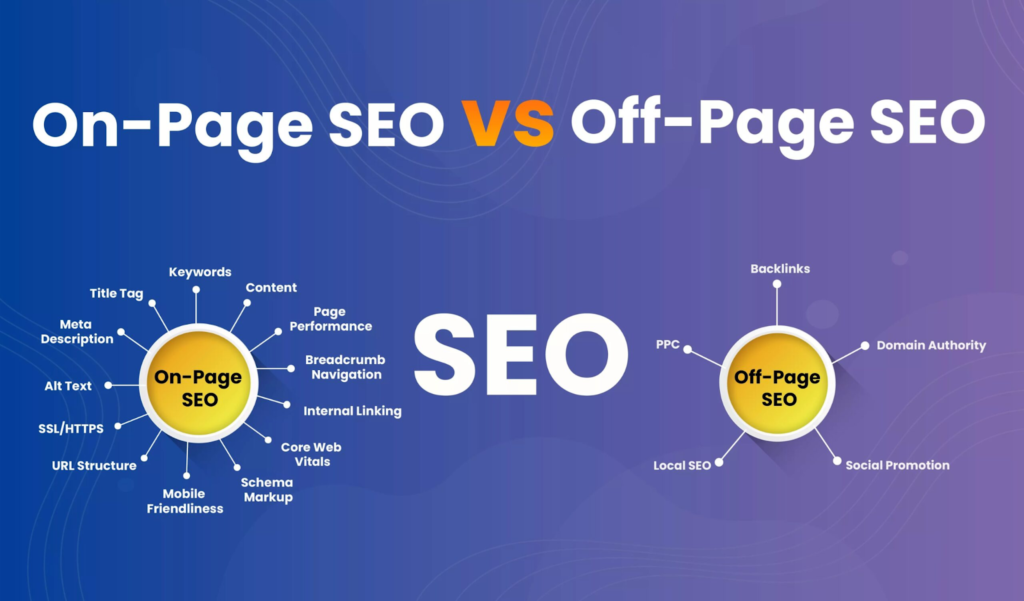
SEO includes two main strategies. You use on-page SEO and off-page SEO to support your site. Both play a clear role in search success.
On-page SEO covers elements on your website. It improves content quality, headings, title tags, descriptions, etc. These elements help search engines read your pages. Users also enjoy a better experience.
Off-page SEO works outside your site. External signals shape this approach. Backlinks, social signals, and brand reputation build authority. Your site earns credibility across the web.
Together, both strategies support strong performance. Your website stays relevant and trusted.
| Aspect | On-Page SEO | Off-Page SEO |
| Control | Elements you can manage directly on your website | External factors outside your direct control |
| Focus | Content, headings, URLs, title tags, meta descriptions | Backlinks, social shares, brand mentions, and online reputation |
| Purpose | Enhance relevance, readability, and user experience | Create authority, trust, and credibility |
| Impact | Directly improves search engine visibility and engagement | Indirectly boosts rankings and drives organic traffic |
Key Elements That Define On-Page SEO
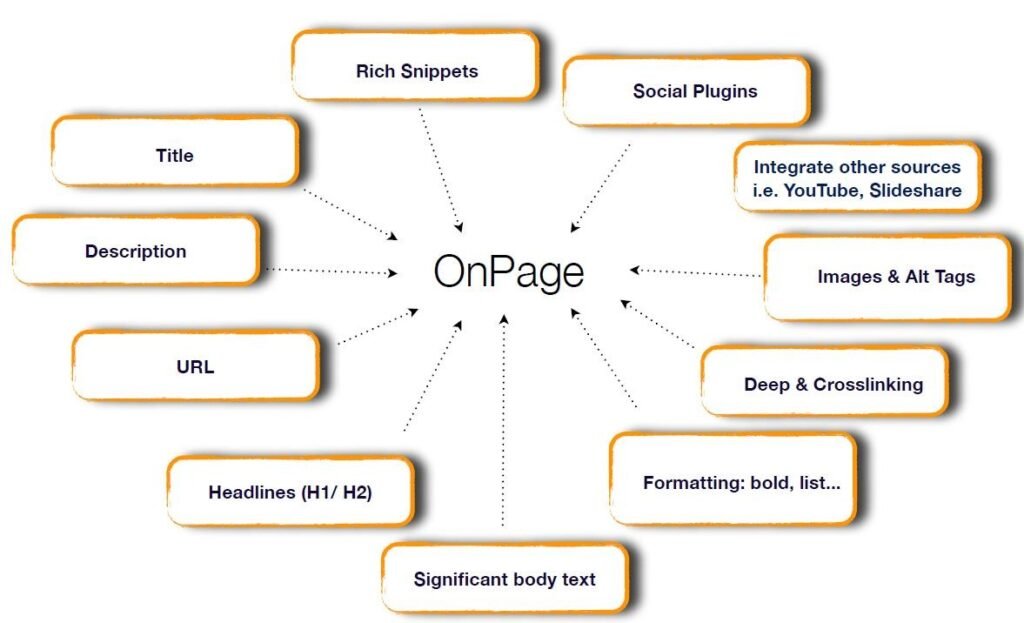
On-page SEO does more than keyword use on your website. You focus on clear structure and easy understanding instead. Search engines understand your relevance through this approach. Users also find real value on your pages.
Think of on-page SEO as a strong base. Every other SEO effort relies on it. Without a solid foundation, results stay limited.
Title Tags and Meta Descriptions
Title tags and meta descriptions are the first impression of search results. They act as your page’s preview. A clear preview attracts clicks and improves engagement.
Why they matter:
- Title tags: Title tags show the main topic in search engines. The primary keywords naturally help search engines to understand your page.
- Meta descriptions: Appear below the title in search results. They don’t directly affect rankings. A strong meta description encourages users to visit your page.
Headings (H1, H2, H3)
Headings give your content structure. They make it easy to scan. The main heading (H1) shows your page topic.
Subheadings (H2, H3) break down supporting points.
- Headings help you find information fast. Readers stay engaged. Search engines understand your content hierarchy better. This improves optimization.
- Keywords in headings naturally make your content more relevant.
Tip: Clear headings keep them on your page. They reduce bounce rates and increase time spent on your site.
Content Quality
High-quality content gives the on-page SEO. It does more than include keywords. You provide valuable and relevant information that meets your audience’s needs.
Good content keeps you engaged. Readers explore other pages on your site. It also improves dwell time. Search engines notice when ranking the pages.
Strong content builds credibility and authority. Users trust your website when the information is clear and useful.
For example, an informational blog post answers common questions clearly. It organizes ideas in a simple structure. This approach satisfies search intent and grows your organic traffic.
URLs
A URL does more than show a web address. It tells search engines about your page covers. Clean and clear URLs help your pages rank higher. They are also easier to remember.
Include primary keywords to give context. Keep URLs short and readable. Follow a clear structure on large websites.
Images
Images add value to your content. They make your pages more engaging. Properly optimized images also support on-page SEO.
Alt text and filenames give context to search engines. They also improve accessibility for users.
Optimized images reinforce content relevance. They improve user experience with faster loading and clear visuals.
How These Elements Work Together?
Title tags, meta descriptions, headings, content, URLs, and images help each other. They help search engines understand your website and every page. You also get a site that is easy to use and helpful.
Optimized elements make your website stronger. Search engines trust your content more. Visitors stay longer on your pages.
Good on-page SEO improves off-page SEO. Strong basics help backlinks and social signals work better. Your website earns more trust across the web.
You create a site that works good in some time. All parts work together to make your site easy to find, clear to use, and valuable.
Advanced On-Page SEO Strategies
Advanced strategies make your website stronger for SEO. They help people find your site. They keep visitors engaged. They also prepare your content for AI search.
Improve Page Speed
Fast pages make visitors happy. They rank better in search results. Quick pages load keep users longer. Metrics like Largest Contentful Paint show that fast content appears. Faster pages give readers a smooth experience.
Use Structured Data
Schema markup helps search engines to understand content. It can show the extra details in search results. Rich results can display ratings, prices, availability, and dates. Articles can show the author and publication date. Local businesses can show location and hours. Schema markup makes your site clear and encourages clicks.
Optimize for AI and LLM Search
AI search is growing. Your content must be clear for both machines and readers. Give direct answers first. Add details after. Break ideas into short paragraphs. Use simple words. Add examples, stats, and keywords. These steps improve SEO and help your content appear in AI results. Your site stays competitive.
Why Choose the Best On-page SEO Services for Your Business?
The right search engine optimization services for small business can make a significant difference in your business. Many businesses have trouble getting customers. Low traffic or bad search rankings can be a problem.
Good SEO strategies make your website work better. They make it easy for people to use. They also bring more visitors.
Professional SEO helps your business stay strong. It reaches the right customers. It helps your business grow over time without wasting money.
Conclusion
On-page SEO is the foundation of your website. It helps search engines and AI systems understand your content clearly. This guide explains how SEO supports both users and search engines in today’s evolving search landscape. When combined with modern concepts like AEO vs SEO, on-page and off-page SEO work together to improve your site’s relevance and build external trust. Strong on-page SEO attracts more visitors, keeps them engaged longer, and helps your pages rank higher. As a result, your website becomes easy to find, valuable for users, and trusted by search engines and AI-driven platforms.
FAQs
Should I Check My Competitors’ On-Page SEO?
Yes. Checking your competitors shows what works in your field. You find gaps and new ideas for your content.
Is On-Page SEO Still Important With AI Search Engines?
Yes. AI search looks for clear and organized content. Good on-page SEO helps search engines and AI understand your pages. It raises your chances to rank or appearing in AI answers.
How Do Content Audits Improve On-Page SEO?
Content audits find old information, broken links, and weak pages. Updating your content with fresh facts and words makes your site better. You get higher rankings and happier visitors.
Can Page Speed Affect My SEO?
Yes. Fast pages keep visitors longer. Slow pages make people leave quickly. Search engines notice speed and rank faster pages higher.
How Do Headings and URLs Influence SEO?
Clear headings and short URLs make pages easy to read. They help search engines grasp your content structure. Well-organized headings and URLs bring more traffic and improve user experience.
Should I Focus on Search Intent Instead of Just Keywords?
Yes. Answer what people really want to know. Content that fits search intent keeps visitors interested. It also increases time on page and boosts conversions. Search engines see your page as very relevant.